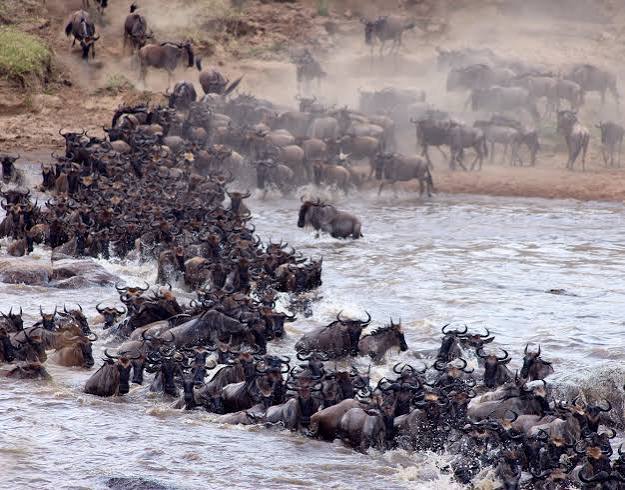
The Great Migration is not a single event but a continuous, year-long journey of nearly two million wildebeest, accompanied by hundreds of thousands of zebras and gazelle, circling the Serengeti-Mara ecosystem in Tanzania and Kenya. For travellers planning a tour, the most important realization is that what you will see depends entirely on when and where you go. A "migration tour" in February looks completely different from one in August. This guide breaks down the migration's annual circuit, the key experiences available in each season, and the practical considerations for booking a trip that matches your expectations.
Understanding the Migration Circuit
The herds move in a roughly clockwise direction, driven primarily by the search for fresh grazing and water. Their journey covers vast distances across the Serengeti National Park in Tanzania and the Masai Mara National Reserve in Kenya. The timing is never exact—rainfall patterns dictate the herds' precise movements—but the general rhythm is predictable enough to plan a tour around.
The year divides into four distinct phases, each offering a fundamentally different safari experience.
Calving Season: January to March (Southern Serengeti / Ndutu)
Best for: Predator action, newborn wildlife, photography, and fewer crowds.
Between January and March, the herds congregate on the short-grass plains of the southern Serengeti and the northern Ngorongoro Conservation Area, around the Ndutu region . This is the calving season. In a synchronized burst of life, roughly 500,000 calves are born within a few weeks, with the peak usually occurring in February. Newborns can stand within minutes and run within an hour, but the sheer concentration of vulnerable prey draws intense predator activity.
A tour during this window offers something the famous river crossings cannot: predictability and intimacy. The plains are flat and open, making it easier to track cheetah hunts or lion prides without the obstruction of riverine forest or the congestion of peak-season vehicles. According to safari operators, visitor volumes are low, and lodge prices in the southern Serengeti can be 30 to 40 percent lower than during the July-to-October high season. For photographers and travelers interested in the raw drama of birth and survival, this is widely considered the most underrated phase of the migration.
The Grumeti Crossings and Rut: April to June (Central and Western Serengeti)
Best for: Green-season landscapes, behavioral spectacles, and value.
As the southern plains dry out, the herds begin moving north and west through the central Serengeti toward the Western Corridor. By May and June, they reach the Grumeti River, where they face their first major obstacle: some of the largest Nile crocodiles in Africa. The Grumeti crossings lack the scale and fame of the Mara River, but they offer a more intimate and less crowded version of the same life-and-death drama.
This period also coincides with the rut, or mating season. Bulls engage in territorial fights, loud vocalizations, and constant displays of dominance as they vie for access to females . The atmosphere on the plains is chaotic and noisy. April and May are the "green season" in Tanzania, meaning lush landscapes, dramatic skies, and lower prices, though travelers should be prepared for occasional rain.
The Mara River Crossings: July to October (Northern Serengeti and Masai Mara)
From July to October, the herds arrive in the northern Serengeti and cross the border into Kenya's Maasai Mara. This phase is famous for the dramatic river crossings along the Mara River, where massive herds navigate torrential currents while avoiding lurking crocodiles. For a comprehensive look at planning your time in the northern sector, explore our insights on bucket list ideas for an unforgettable Tanzania safari.
Best for: The iconic river crossing spectacle, dramatic predator-prey interactions, and peak-season wildlife density.
This is the phase most people picture when they imagine a wildebeest migration tour. From late July through October, the herds mass in the northern Serengeti (around Kogatende and Lamai) and cross the Mara River into Kenya's Masai Mara, often re-crossing multiple times as they follow local rainfall. The crossings are chaotic, dangerous, and unforgettable: thousands of animals plunge into fast-moving water while crocodiles wait below and lions patrol the banks.
It is essential to understand that crossings are not guaranteed on any given day. Herds may gather on the bank for hours or even days before one animal triggers a stampede. A short two-night stay during peak season might miss a crossing entirely; most operators recommend at least three to four nights in the area to maximize the odds. This is also the busiest and most expensive time to travel, with camps booked out a year or more in advance and multiple vehicles converging at popular crossing points.
The Return Journey: November and December (Eastern and Southern Serengeti)
Best for: Quieter safaris, reflective travel, and seeing the herds on the move without the crowds.
After the crossing season, the herds begin drifting back south through the eastern Serengeti and the Lobo area, eventually returning to the southern plains to prepare for the next calving season. November often brings short rains, and the landscape turns green again. This is a transitional period with fewer tourists and lower rates, though wildlife viewing remains excellent. For travellers who have already seen a river crossing or who prioritize solitude over spectacle, the return journey offers a more private and contemplative way to witness the migration.
Choosing Between Tanzania and Kenya
A common planning question is whether to base a migration tour in Tanzania or Kenya. The answer depends on the season and your priorities.
Tanzania offers access to the full circuit. The Serengeti is vast—roughly ten times the size of the Masai Mara—and the calving season, Grumeti crossings, and rut all occur within its borders. A Tanzania-based tour in January or February provides the best predator viewing and the most dramatic newborn action. From July to October, northern Serengeti camps offer access to the Mara River with generally fewer vehicles than the Kenyan side, though crossings still draw crowds.
Kenya is the classic choice for the peak crossing season. The Masai Mara is more compact, and its river crossings are concentrated and easily accessible from permanent camps . For a first-time traveler whose primary goal is to witness a Mara River crossing with minimal logistical complexity, a Kenya-based tour in August or September is a straightforward and highly rewarding option.
Practical Considerations for Booking
Cost: Migration safaris are a premium product. Prices vary widely based on country, season, accommodation type, and duration. As a rough baseline, tailor-made camping or mid-range lodge safaris in Tanzania start around $3,000 to $4,600 for six to eight days during non-peak periods. Peak-season Kenya or Tanzania tours with luxury accommodations can exceed $7,000 to $10,000 per person. Booking through an operator that specializes in the migration is advisable, as they can place you in camps positioned for the season's action.
Duration: A minimum of six to eight days is recommended for a meaningful migration tour, allowing time for game drives, transfers, and buffer days around unpredictable river crossings. Ten to twelve days allows for a more relaxed pace and the inclusion of other parks such as the Ngorongoro Crater or Amboseli .
Mobile versus permanent camps: Many operators use mobile tented camps that relocate seasonally to follow the herds. These offer proximity to the migration but vary in luxury level. Permanent lodges and camps offer more consistent amenities but may be farther from the action depending on the month.
Managing expectations: The migration is a natural phenomenon, not a scheduled event. Herds may be farther away than expected, crossings may not happen on your schedule, and rain can alter movements. The best tours build in flexibility and are led by guides who communicate with trackers and other camps to locate the herds. Travelers who approach the experience as a genuine wildlife expedition rather than a guaranteed spectacle consistently report the most satisfying trips.
Conclusion
A wildebeest migration tour is less about checking off a single bucket-list moment and more about choosing which chapter of a vast, ongoing story you want to witness. The calving season offers predator action and intimacy; the Grumeti crossings and rut provide behavioral drama with fewer crowds; the Mara River crossings deliver the iconic, chaotic spectacle; and the return journey rewards those who seek solitude and value. By aligning your travel dates with the phase that matches your interests, and by choosing a camp and operator suited to that season, you can turn a vague ambition to "see the migration" into a precisely tailored and deeply memorable safari. Travellers focusing entirely on Tanzania can explore our 8-day Tanzania Great Migration itinerary, which takes you from Tarangire National Park across the central and northern Serengeti before finishing with a descent into the crater.
Plan a trip around this
Tell us your dates and what you want to see. We will build the route.