Dieser Beitrag ist vorerst nur auf Englisch verfügbar.
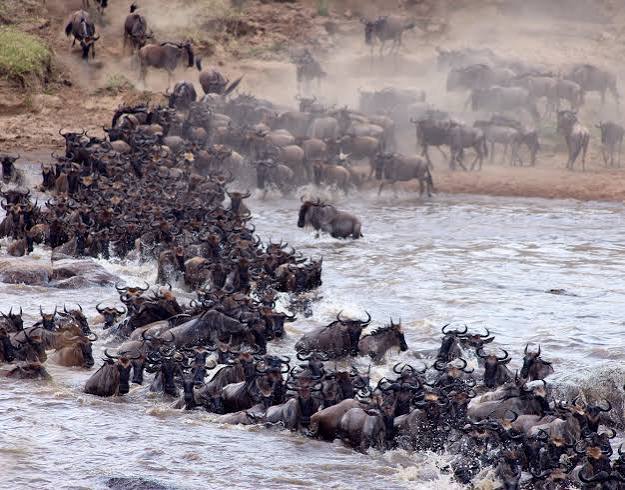
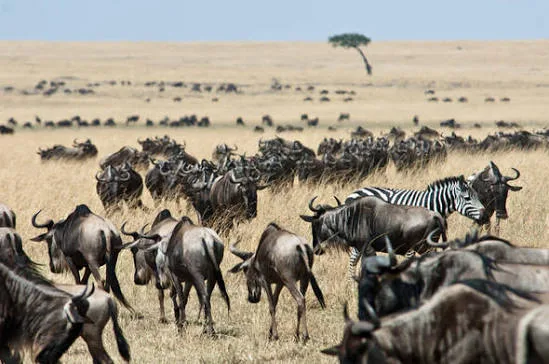
Planning a Great Migration safari across Kenya and Tanzania for 2026 or 2027 requires confronting an uncomfortable truth: the spectacle you have seen on television—wildebeest plunging into crocodile-infested rivers—is not a scheduled event. It is a chaotic, weather-driven phenomenon that moves roughly 1.5 million wildebeest, 200,000 zebra, and hundreds of thousands of gazelles in a clockwise loop between the Serengeti and the Maasai Mara. The single most consequential decision you will make is not which lodge to book, but when you book it. For peak river-crossing season, the window for securing the best camps closes 12 to 18 months before departure. If you are reading this intending to travel in August 2026 or 2027, you are already operating on borrowed time.
The Migration Calendar: Where the Herds Actually Are
The migration is not a single event but a continuous cycle, and your itinerary must match the herds' location, not your preferred travel dates. From January to March, the herds occupy the southern Serengeti and Ndutu for calving season, with thousands of calves born daily—drawing intense predator activity. By April and May, the long rains push the animals toward the central and western Serengeti, a period of lower rates and fewer crowds but muddy roads. June sees the herds massing near the Grumeti River in the western corridor. The famous Mara River crossings** typically begin in July in the northern Serengeti and continue through October, with August and September offering the highest probability of witnessing a crossing. Crucially, the herds spend roughly nine months of the year in Tanzania and only two to three in Kenya; a Kenya-only safari outside July–October misses the migration entirely.
Kenya vs. Tanzania: The Real Trade-offs
Choosing between the two is not a matter of which is "better" but which fits your constraints. Kenya's Maasai Mara is compact—roughly one-tenth the size of the Serengeti—and close to Nairobi, making it efficient for shorter trips of four to six days. The density of big cats is exceptional, but in peak season, dozens of vehicles can converge on a single crossing or predator sighting. Park fees reflect this demand: the Maasai Mara charges **US$200 per adult per day from July to December.
Tanzania's Serengeti offers scale and solitude. You can drive for an hour without seeing another vehicle outside the busiest crossing points. The migration is present in some form for most of the year, and the Ngorongoro Crater adds reliable black rhino sightings. Peak-season Serengeti Park fees are lower at US$82.60 per day, though the distances are greater and internal charter flights add cost. A combined Kenya-Tanzania itinerary—typically three nights in the Mara, three in the northern Serengeti, and a night at Ngorongoro—captures both ecosystems but requires ten to fourteen days to justify the logistics.
Booking Timeline: Why Early Is Not a Suggestion
The mathematics of migration season are unforgiving. Camps near the Mara River have a fixed number of tents, and demand concentrates into a narrow window. Industry guidance is consistent: book 12 to 18 months ahead for peak migration departures. Between six and twelve months out, you may still find availability, but the best-positioned camps will be gone, forcing compromises on location or paying more for inferior positioning. Below six months, the itinerary becomes a negotiation with whatever remains rather than a design around the herds.
For 2026 and 2027 specifically, rates are already being released with general increases of around 5%, and popular camps in the Mara and Serengeti are seeing 10% or higher increases due to demand. Some operators have extended peak-season pricing from June through October, eroding the value of shoulder-season travel.
## Itinerary and Pricing Benchmarks
| Option | Duration | Route | Indicative Price (per person) | Notes |
|--------|----------|-------|-------------------------------|-------|
| Lightfoot Travel (luxury) | 6 nights | Mara North Conservancy + Sayari Camp (N. Serengeti) | From HK$61,000 | Closest permanent camp to Mara River; tailor-made |
| African Travel, Inc. | 11 nights | Nairobi, Amboseli, Lewa, Mara, Ngorongoro | From $14,295 (land only) | Promo: save up to $1,000 for deposits Apr–Jun 2026 |
| Saga Holidays (UK) | 13 days incl. flights | Amboseli, Ngorongoro, Serengeti, Mara | From £6,595–£8,195 | Includes flights and insurance; departures through 2027 |
| Combined mid-range (operator estimate) | 8–10 days | Kenya + Tanzania | $4,500–$7,000 | Peak migration plus Big Five
For a genuinely luxurious crossing-focused trip, the Lightfoot itinerary is the most surgically targeted: it places you in the Mara North Conservancy and then at Sayari Camp, which sits closest to the Mara River among permanent camps, maximizing your odds of being present when a crossing occurs. The African Travel package offers a broader East African survey with a current promotional window. Saga’s offering suits UK travellers who prefer flights and insurance bundled, though the itinerary is more general wildlife viewing than a hard migration focus.
Practical Considerations Before You Deposit
River crossings are never guaranteed. Guides in 2024 had to reposition clients 60 kilometres overnight when the herds crossed earlier than expected . Build flexibility into your expectations and, if possible, your itinerary—multiple nights in the crossing zone increase your chances.
Distinguish between the reserve and conservancies in Kenya. The Maasai Mara National Reserve is crowded in peak season; adjacent private conservancies like Mara North limit vehicle numbers and permit walking and night drives, offering a more controlled experience .
Verify what is included. Many luxury packages quote land-only prices, with internal charter flights (often essential for reaching remote camps efficiently) added separately. Confirm whether park fees, conservancy fees, and inter-camp flights are included before comparing quotes.
Consider the calving season alternative. If river crossings are not essential, January to March in the southern Serengeti offers extraordinary predator action around newborn calves at significantly lower rates and with far fewer vehicles . It is a different spectacle, but arguably a more intimate one.
The Great Migration rewards those who plan around its unpredictability rather than despite it. For 2026 and 2027 travel, the time to secure the right camp in the right place is now.https://elysonadventures.com/
Planen Sie eine Reise rund um dieses Thema
Nennen Sie uns Ihre Reisedaten und Wünsche. Wir stellen die Route zusammen.