Per ora questa storia è disponibile solo in inglese.
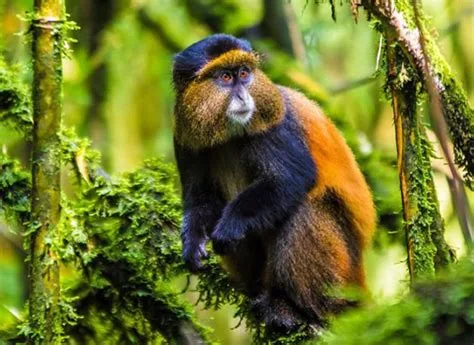
Golden monkeys are found only in the high-altitude Virunga Mountains of East Africa and a few isolated forests in Rwanda, making them a rare and rewarding wildlife sighting for any primate enthusiast. For most travellers, choosing between Rwanda and Uganda for golden monkey tracking comes down to your budget, how much time you have, and whether you prefer an easier walk or a deeper research-focused experience.
Where to Find East Africa's Golden Monkeys
These energetic, bright-orange primates inhabit the bamboo-dominated slopes of volcanoes shared by three countries: Rwanda, Uganda, and the Democratic Republic of Congo. Because they rely heavily on bamboo shoots and leaves, they stay within specific zones on the lower and middle slopes of the mountains. Unlike mountain gorillas, which tend to move deeper into heavy montane forest and build new nests every night, golden monkeys live in familiar home ranges. This makes them predictable to locate once trackers find their fresh feeding signs from earlier in the morning.
When planning your journey, you will generally look at two primary protected areas that offer reliable, well-managed tracking programmes. These parks sit right in the heart of the Virunga chain, offering dramatic backdrops of towering volcanic cones and cool mountain air. While you can sometimes combine these excursions with broader wildlife routes—such as those found on a 4 Day Uganda Gorilla and Golden Monkey Trekking Safari—it helps to understand what each specific habitat offers before you book.
Rwanda's Volcanoes National Park
Volcanoes National Park in northwestern Rwanda is often the top choice for travellers with limited time or those who prefer shorter, less strenuous walks. Situated just a short drive from Kigali, the park protects two habituated golden monkey troops. One of these troops is exceptionally large, often numbering between 80 and 100 individuals. Because they frequently forage near farmland and lower bamboo zones bordering the park boundary, sightings are exceptionally reliable.
If you want to pair this experience with other iconic sightings in the country, a Rwanda Mountain Gorillas and Golden Monkeys Tour provides a compact three-day itinerary. It combines a morning tracking these playful primates with a gorilla trek and a Kigali city tour, offering a complete snapshot of the region without demanding a massive block of annual leave.
Uganda's Mgahinga Gorilla National Park
Across the border in southwestern Uganda, Mgahinga Gorilla National Park protects the Ugandan slopes of the same Virunga volcanoes. Mgahinga is home to one habituated golden monkey troop available for regular tracking, plus a second troop undergoing the habituation process. The terrain here is slightly more rugged than in Volcanoes National Park, requiring you to climb through secondary forest and bamboo for roughly 60 to 90 minutes before your encounter begins. Despite the extra effort, the trek remains significantly less physically demanding than tracking mountain gorillas through the steep hills of Bwindi.
Comparison of the Two Main Tracking Destinations
To help you weigh your options directly, the table below highlights the practical differences between tracking golden monkeys in Rwanda versus Uganda:
Feature | Rwanda · Volcanoes National Park | Uganda · Mgahinga Gorilla National Park Permit Price (foreign non-residents) | $100 USD | $60 USD Trek Difficulty | Relatively easy, mostly flat bamboo forest at lower elevations, shorter walks | Moderate, requires climbing through secondary forest for 60–90 minutes, but still less strenuous than gorilla trekking Number of Habituated Troops | 2 troops, with the larger one having 80–100 individuals | 1 troop Signature Experience | High certainty of sightings; monkeys often venture near farmland, making them easy to find | Unique 4-hour habituation experience, allowing you to observe and learn about golden monkey behavior alongside researchers Best For | Travelers with limited time, families, or those wanting a relaxed experience | Budget-conscious travelers, primate enthusiasts, or photographers wanting in-depth observation
What to Expect on the Trekking Day
Golden monkey tracking begins early in the morning at the respective park headquarters. Rangers give a thorough briefing on park rules, group etiquette, and what to expect in the forest. Unlike gorilla tracking groups, which are strictly capped at eight visitors per family, golden monkey groups can sometimes be slightly more flexible depending on park management and the size of the troop, though numbers remain controlled to minimise stress on the animals.
Once you enter the bamboo zone, the search usually takes between one and three hours. The first clue is often the sound of cracking bamboo stalks or rustling leaves high above. When you find the troop, you are allowed one hour to observe them up close. Golden monkeys are exceptionally active, leaping effortlessly between bamboo stems, chasing one another, grooming, and feeding on tender shoots. Their bright orange backs and lively facial expressions provide brilliant photography subjects, especially when sunlight filters through the tall bamboo canopy.
Tips for Photography and Gear
Photographing golden monkeys presents unique challenges compared to larger wildlife. Because they move quickly and dart through dense vertical bamboo stalks, autofocus can sometimes struggle to lock onto the right subject.
- Use a fast shutter speed of at least 1/500s to freeze the action as they leap between branches.
- Pack a versatile zoom lens, such as a 70-200mm, which lets you adjust quickly whether the monkeys are feeding at your feet or high in the canopy.
- Wear neutral-coloured clothing (greens, browns, or greys) and sturdy waterproof hiking boots with good grip for muddy or slippery paths.
- Bring gaiters or tuck your trousers into your socks to keep out safari ants and loose debris from the forest floor.
Additional Planning Notes and Alternative Options
While Volcanoes and Mgahinga are the definitive choices for standard tourism, East Africa continues to evolve its conservation and travel landscape. It helps to keep a few broader logistics in mind before finalising your travel dates.
A Third Option: Gishwati-Mukura National Park in Rwanda
Rwanda features a third national park that harbours golden monkeys: Gishwati-Mukura National Park. As Rwanda's newest gazetted park, its tourism infrastructure is still developing, and tracking visits are far less established than in Volcanoes National Park. Unless you have a specific interest in supporting nascent reforestation and community conservation projects in this sector, we recommend prioritising Volcanoes National Park or Mgahinga for a smoother, more reliable holiday experience.
Best Time to Visit
Golden monkey tracking is open year-round, but your comfort in the forest depends heavily on the seasonal weather patterns. The optimal windows are the dry seasons, running from June to September and from December to February. During these months, rainfall is significantly lower, trails are firmer, and hiking through the Virunga foothills is much more manageable. If you plan your visit during the rainy seasons (March to May and October to November), expect slippery mud and wet bamboo, though the forest views are lush and permits are often easier to secure on short notice. For broader context on regional climate patterns, you can read our guide on Best time to see gorillas in Rwanda.
Whether you want a quick weekend primate getaway in Rwanda or an extended cross-border safari that combines golden monkeys with savannah wildlife, our local team at Elyson Adventures can design a trip tailored exactly to your pace. Head over to our a https://elysonadventures.com/ page to start planning your custom East African journey with us today.
Pianifica un viaggio a partire da qui
Dicci le tue date e cosa vuoi vedere. Costruiremo noi l’itinerario.