Dit verhaal is voorlopig alleen in het Engels beschikbaar.
The migration of wildebeest is an endless, weather-driven journey that circles the vast ecosystem shared between Kenya and Tanzania. Timing your safari successfully requires aligning your dates with the specific regions where the herds gather throughout the year.
Understanding the Endless Loop
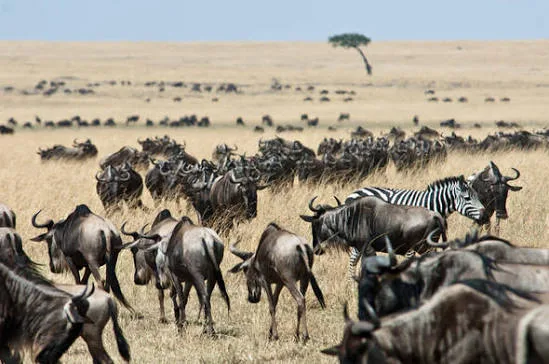
More than a million wildebeest, alongside hundreds of thousands of zebras and gazelles, travel constantly in search of fresh grass and water. They cover hundreds of kilometres across open savannahs, river valleys, and acacia woodlands, driven entirely by rainfall patterns. Because these rains vary from year to year, the exact timing of animal movements shifts slightly, meaning flexibility is essential when designing your itinerary.
Before booking your dates, we recommend reading our breakdown on the migration of wildebeest: what it is, why and when to go to understand the core mechanics of this continuous loop. You can also consult our detailed wildebeest migration maps to trace the herds month by month across the Serengeti and the Maasai Mara.
Calving Season in the Southern Serengeti
From January to March, the herds congregate on the short-grass plains of the southern Serengeti in Tanzania. This period marks the calving season, when thousands of newborn wildebeest enter the world each day, drawing large numbers of predators such as lions, cheetahs, and hyenas.
What to Expect During Calving Months
- Vast herds spread across open, nutrient-rich volcanic plains
- High concentration of big cats taking advantage of vulnerable calves
- Warm weather with occasional tropical showers that keep the grass green
- Exceptional wildlife photography opportunities with dramatic predator action
Travellers seeking this phase of the journey often combine Tanzania's southern plains with other regional highlights. For a comprehensive adventure that includes the Serengeti, the wildlife-filled bowl of the Ngorongoro Crater, and the coast of Zanzibar, our 8-Day Tanzania Great Migration offers an exceptional private safari experience.
River Crossings in Kenya and Northern Tanzania
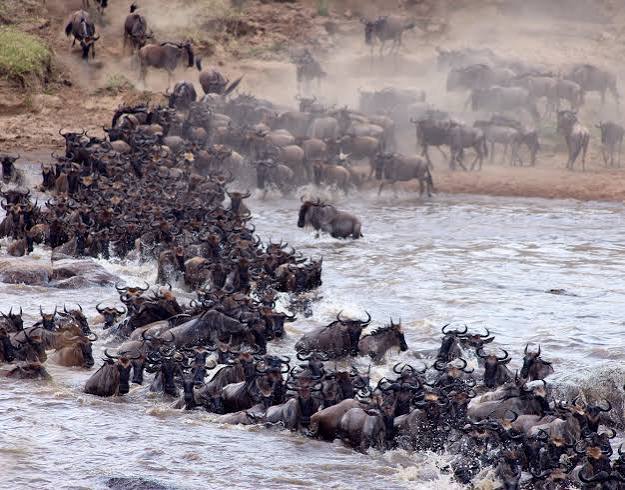
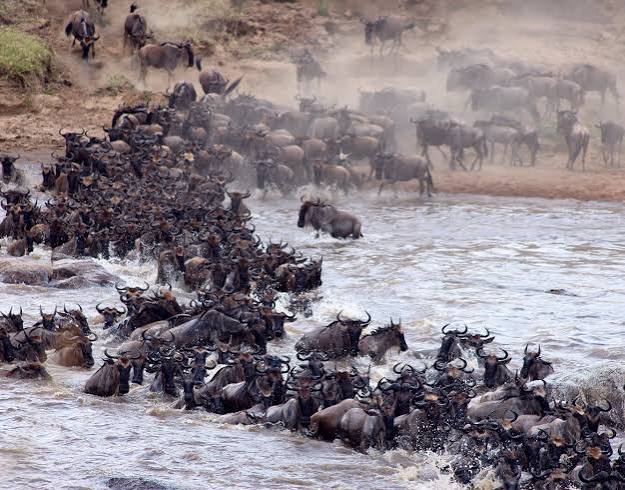
Between July and October, the herds push north, facing their most famous obstacle: the Mara River. Plunging down steep muddy banks into churning waters filled with crocodiles, the wildebeest create a chaotic and unforgettable spectacle that defines classic East African wildlife viewing.
River crossings are entirely dictated by the rains and the animals themselves, requiring patience and expert local guiding to witness firsthand.
Planning for River Crossings
- Focus your time in the northern Serengeti or the Maasai Mara between July and October
- Allow multiple days in prime river areas to increase your chances of seeing a crossing
- Combine both Kenyan and Tanzanian reserves to follow the herds seamlessly across the border
To experience both sides of this dramatic northern movement without backtracking, our Great Migration Safari takes you from the Maasai Mara across into the northern Serengeti by light aircraft, ensuring you remain close to the herds throughout your journey.
Combining Kenya and Tanzania into One Journey
Because the migration ignores international borders, crossing between Kenya and Tanzania provides the most complete perspective of the ecosystem. A multi-country route allows you to experience the open plains of the Maasai Mara alongside Tanzania's legendary parks, including Tarangire, the Serengeti, and the Ngorongoro Crater.
If you have ten days to spare and wish to experience iconic landscapes across both nations, consider our 10-Days Kenya and Tanzania Savannah Safari, which connects Nairobi, the Maasai Mara, Lake Nakuru, Amboseli, Tarangire, the Serengeti, and Ngorongoro into a single cohesive route. For travellers with a deeper focus on Kenya alone, our 10-Day Best of Kenya Wildlife Safari experience explores Samburu, Ol Pejeta, Lake Nakuru, the Maasai Mara, Lake Naivasha, and Amboseli.
Practical Logistics for Your Safari
Organising a migration safari involves navigating park entry fees, border crossings, domestic light-aircraft connections, and vehicle logistics. Using a private 4x4 safari vehicle with an experienced local driver-guide ensures you can move at your own pace, repositioning quickly when wildlife sightings shift.
For further insights into securing accommodations and managing permits well in advance, read our guide on Great Migration Safari Booking Kenya & Tanzania 2026–2027. Securing your dates early is vital, particularly for camps located near the Mara River and the southern calving grounds.
Plan your migration safari with Elyson Adventures and let our local team design a private, tailor-made itinerary that puts you in the right place at the right time. Start shaping your journey today by visiting our https://elysonadventures.com/
Plan een reis rond dit verhaal
Vertel ons je data en wat je wilt zien. Wij bouwen de route.