Por agora esta história só está disponível em inglês.
While most of the world associates Christmas with snow, fireplaces, and the quiet hum of tradition, a small and adventurous minority chooses a different kind of holiday magic. They choose the misty, green cathedral of a rainforest. They choose the thrill of pushing through dense undergrowth, following a team of trackers who have been out since dawn. They choose the moment when the forest opens and a silverback mountain gorilla turns to meet their gaze. Christmas holiday gorilla trekking is not a conventional celebration, but for those who undertake it, it is unforgettable—a gift that cannot be wrapped.
Why Christmas is a Surprisingly Good Time to Trek
The first question most travelers ask is whether December is actually a sensible time to visit the gorillas. The answer is a qualified yes, provided you understand what you are signing up for. In both Rwanda and Uganda, the period from mid-December to early February marks the short dry season, a window when trails are generally firmer and trekking conditions improve compared to the heavy rains of October and November . December sits at the beginning of this window, meaning you may still encounter residual moisture, but the trend is toward drier, more stable weather.
The more significant consideration is demand. The Christmas and New Year period brings a noticeable surge in visitors to both Volcanoes National Park in Rwanda and Bwindi Impenetrable National Park in Uganda . Permits, which are already limited by conservation quotas, become scarce, and lodges near the park gates book out months in advance. This is not a trip to plan on a whim. It is a trip to secure early, ideally six to nine months ahead, especially if you have specific dates in mind.
It is also worth noting that gorilla trekking operates every single day of the year, including Christmas Day and New Year’s Day . The parks do not close for the holidays. Rangers, trackers, and guides are on duty. The forest does not observe the calendar.
Choosing Your Destination: Rwanda or Uganda
The two countries offer distinctly different versions of the same extraordinary experience.
Rwanda is the more polished and accessible option. Volcanoes National Park sits roughly a two-to-three-hour drive from Kigali, making it possible to arrive in the country, transfer to a lodge near the park, trek the following morning, and be back in the capital by evening . The terrain is volcanic and bamboo-dominated, often described as more moderate than the dense rainforest of Uganda. Luxury lodges like Bisate and Virunga offer high-end comfort, and the compact nature of the country makes it easy to combine a gorilla trek with Akagera National Park or Nyungwe Forest . The trade-off is cost: Rwanda’s gorilla permit is fixed at US$1,500 year-round .
Uganda offers a rawer, more remote experience. Bwindi Impenetrable National Park is a longer journey from Entebbe or Kampala, often requiring a domestic flight or a full day’s drive. The forest is dense, steep, and genuinely challenging—the name is not marketing . But Uganda’s permits are more affordable, and during the low-season months of April, May, and November, they are discounted to US$600. December, however, falls outside that discount window, so expect to pay standard rates . Uganda also offers a wider range of lodge budgets and the chance to combine gorillas with chimpanzee tracking in Kibale or safari in Queen Elizabeth National Park.
For a Christmas trip, the choice often comes down to time and budget. Rwanda suits shorter itineraries and travelers who prioritize comfort and efficiency. Uganda suits those with more days to spare and a willingness to embrace the mud.
What Christmas Day in the Forest Actually Looks Like
A gorilla trekking day begins early, often before dawn. You will be driven to the park headquarters for a briefing, where rangers explain the rules: keep your voice low, no flash photography, maintain a distance of at least seven meters, and if a gorilla approaches you, stay still and do not run . Visitors are assigned to a habituated gorilla family based on fitness level and preferences, with shorter treks available for those who need them.
Then the walk begins. A team of trackers has been out since first light, locating the family’s overnight nesting site and following their movements. Your guide communicates with them by radio. The trek can last anywhere from two to eight hours depending on where the gorillas have chosen to feed that morning . The terrain is steep, often muddy, and the vegetation is thick. This is not a gentle nature walk.
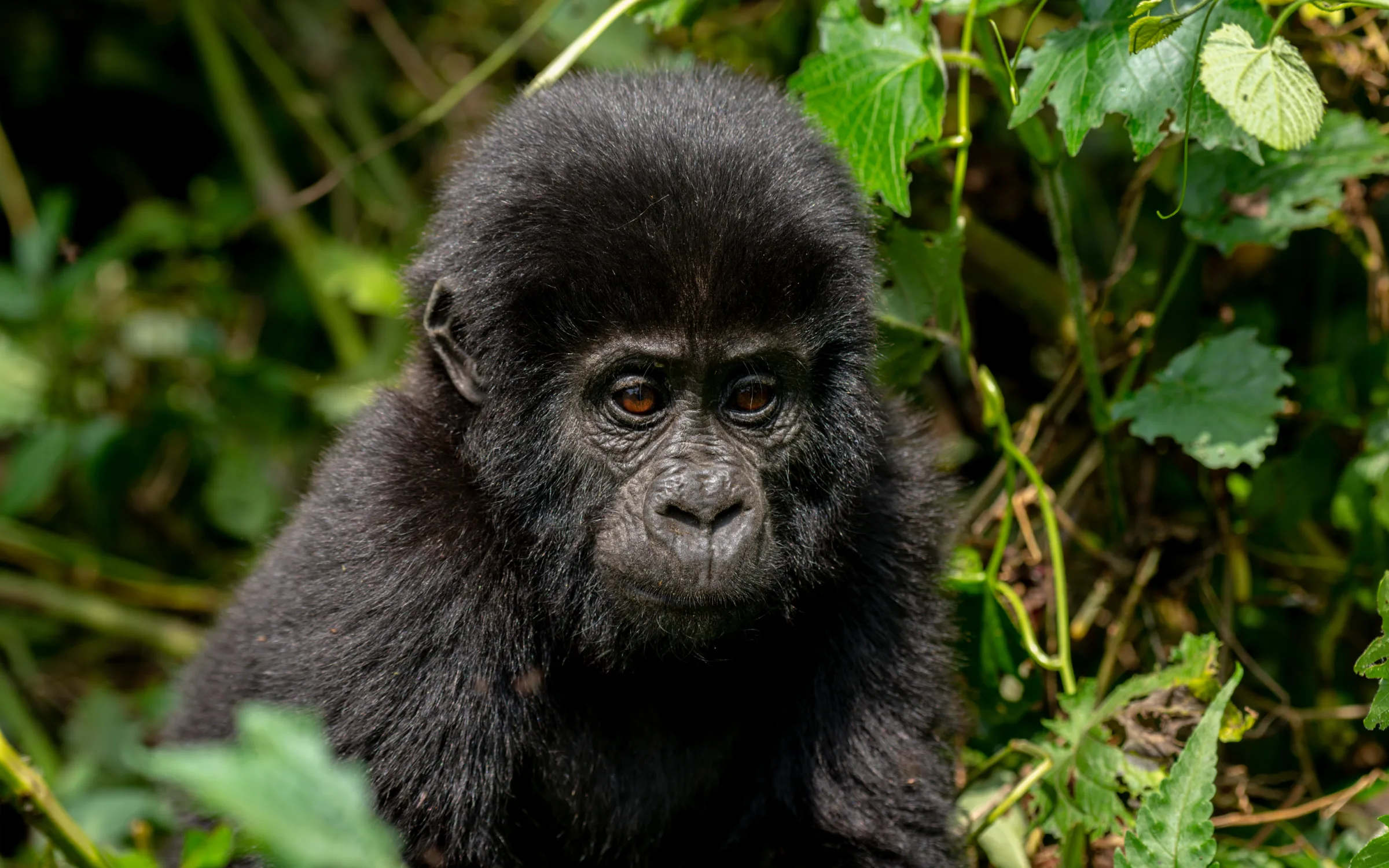
And then, suddenly, it happens. The trackers signal. You leave your packs, take only your camera, and follow your guide through one last thicket. And there they are—a family of mountain gorillas, going about their morning as if you are not there at all. An infant tumbles from a branch. A mother nurses. The silverback, massive and calm, watches.
You have one hour. That is the rule, designed to limit human impact on these vulnerable animals . It is both an eternity and no time at all.
For Christmas specifically, some lodges arrange festive meals and celebrations for returning trekkers . There is something quietly profound about sitting down to a Christmas dinner after spending the morning in the presence of a species that exists nowhere else on Earth, knowing that your permit fees have contributed directly to anti-poaching patrols, veterinary care, and community programs that make their survival possible .
Packing for a Rainforest Christmas
The packing list for a December trek is not dramatically different from any other time of year, but it leans toward preparation for wet conditions. Even in the short dry season, rain is always possible in a cloud forest .
The essentials are uncompromising. Waterproof hiking boots with good ankle support and aggressive tread are non-negotiable; the trails are steep and slick . Long trousers and long-sleeved shirts in neutral colors protect against stinging nettles, thorns, and insects, and should be tucked into socks to keep safari ants out . A waterproof rain jacket is essential regardless of the forecast . Gardening gloves are a small item that trekkers consistently wish they had brought, useful for grabbing vegetation on steep sections .
A porter is worth hiring at the trailhead. For a modest fee, a local porter will carry your daypack and offer a hand on difficult sections. It supports the local economy and makes the trek significantly more enjoyable, particularly in muddy conditions .
Leave behind bright clothing, strong perfume, drones, and single-use plastic bags, all of which are either prohibited or inadvisable in the park .
The Gift That Cannot Be Wrapped
There is a reason people describe gorilla trekking as life-changing. It is not simply the proximity to a wild animal that shares 98 percent of our DNA. It is the awareness that this encounter is fragile. Mountain gorillas exist in a handful of forests in three countries, and their survival depends on the very tourism that brings visitors to them. Every permit sold funds the rangers who protect them, the veterinarians who treat them, and the communities who share the forest edge with them.
A Christmas spent in the rainforest, muddy and tired and utterly awestruck, is a strange and wonderful alternative to the familiar rituals. It is a reminder that the most meaningful gifts are not found under a tree. They are found on a steep forest slope, in the quiet hour spent with a family of gorillas, on a day that will never be forgotten.https://elysonadventures.com/
Planeie uma viagem a partir daqui
Diga-nos as suas datas e o que quer ver. Nós criamos a rota.