Por ahora esta historia solo está en inglés.
Gorilla trekking in Uganda is one of the few wildlife experiences on Earth that genuinely lives up to the hype. Coming face to face with a mountain gorilla family in the dense rainforest of Bwindi Impenetrable National Park is not merely a checkbox on a safari itinerary; it is a profoundly moving encounter with a species that teetered on the brink of extinction and survived, in part, because of the tourism revenue that trekking generates. For travelers planning a trip, however, the experience requires careful preparation: permits are limited and expensive, the terrain is demanding, and the choice of park and season significantly shapes what kind of trek you will have. This guide covers everything you need to know to plan a successful gorilla trekking tour in Uganda.
Why Uganda for Gorillas?
Uganda is home to roughly half of the world's remaining mountain gorillas, with the majority residing in Bwindi Impenetrable National Park and a smaller population in Mgahinga Gorilla National Park. The country has positioned itself as a more accessible alternative to Rwanda, where permit prices are nearly double. A Ugandan permit costs $800 for foreign non-residents, compared to $1,500 in Rwanda. Beyond cost, Uganda offers a broader safari experience: the country contains savannah parks with lions, elephants, and chimpanzees, making it possible to combine gorilla trekking with a more traditional wildlife safari.
The trade-off is logistics. Bwindi is roughly 470 to 500 kilometers from Entebbe International Airport, an eight-to-ten-hour drive overland, though internal flights to Kihihi or Kisoro reduce the journey to about an hour in the air plus a drive to the park. Rwanda's Volcanoes National Park, by contrast, is a short drive from Kigali. Travelers who prioritize efficiency may prefer Rwanda; those who want a deeper, more varied East African journey often find Uganda worth the extra effort. Multi-Country Primate Tours: Travellers looking to bridge East African borders can explore diverse ecosystems on the 6 Days Rwanda Uganda Budget Safari, featuring Volcanoes golden monkeys, Bwindi gorillas, and Queen Elizabeth game drives.
Choosing Your Park: Bwindi vs. Mgahinga
Uganda has two parks where gorilla trekking is possible, and they offer very different experiences.
Bwindi Impenetrable National Park is the primary destination for the vast majority of trekkers. It is a UNESCO World Heritage Site covering 321 square kilometers of ancient rainforest, and it contains approximately 25 habituated gorilla families, with around nine to twenty open to tourism depending on the source and season. The park is divided into four trekking sectors—Buhoma, Ruhija, Rushaga, and Nkuringo—each with its own trailhead and character. Because so many families are resident within the park, the odds of a successful trek are near 100 percent. Treks can range from one hour to six or more hours each way, depending entirely on where the gorillas have moved overnight.
Mgahinga Gorilla National Park is Uganda's smallest national park, covering just 30 square kilometres on the slopes of the Virunga volcanoes. It has only one habituated gorilla family, the Nyakagezi group, whose home range extends across the borders of Uganda, Rwanda, and the Democratic Republic of Congo. This means the family may not be in Uganda on your chosen day, and permits can only be booked a maximum of 14 days in advance. For travelers who want certainty, Bwindi is the clear choice. Malinga’s appeal lies in its quieter trails, dramatic volcanic scenery, and the chance to combine gorilla trekking with golden monkey tracking, an activity unavailable in Bwindi. For travellers wanting to combine multiple rare primates, our 4 Day Uganda Gorilla and Golden Monkey Trekking Safari offers a seamless route through both habitats.
Permits: The Most Important Booking You Will Make
A gorilla trekking permit is mandatory and non-negotiable. It is issued by the Uganda Wildlife Authority (UWA) and includes park entry, ranger guidance, and one hour with a gorilla family. The permit is date-specific and sector-specific—you are booked into a particular family on a particular day, not simply granted general admission to the park.
The standard cost for foreign non-residents is $800 per person. Uganda has offered a discounted rate of $600 for low-season months (April, May, and November) in recent years, though travelers should confirm current pricing directly with UWA or a licensed operator before booking. Foreign residents pay $700, and East African citizens pay UGX 300,000.
Permits sell out, particularly during peak dry seasons. Operators recommend booking **three to six months in advance for June through September and December through February, and some popular sectors can sell out even earlier. UWA releases permits up to two years ahead, so travelers with fixed dates should secure permits before booking flights or lodges. Most first-time visitors book through a licensed tour operator, who bundles the permit with transport, accommodation, and guiding, and who can navigate availability more quickly than an individual booking directly. Payment is typically required in full at the time of booking, and permits are non-refundable and non-transferable.
When to Go
Gorilla trekking operates year-round, but the experience varies significantly with the seasons.
The dry seasons—June to September and December to February—are widely considered the best time to trek. Trails are less muddy, hiking conditions are easier, and photography benefits from clearer light. These months are also the most popular, meaning permits and lodges book up early and prices are at their highest.
The wet seasons—March to May and October to November—bring rain, mud, and more challenging trails, but they also offer compelling advantages. Visitor numbers drop, lodges offer discounts of up to 30 percent, and gorilla permits may be available at reduced rates. Gorillas often move to lower elevations when food is plentiful on the slopes, which can mean shorter treks. The forest is lush and atmospheric, and the experience feels more private. April is typically the wettest month, and some lodges close entirely. Travelers who are prepared for rain and mud and who prioritize solitude and value over ease may find the wet season surprisingly rewarding.
The Trekking Day: What to Expect
A gorilla trekking day begins early. Travelers gather at park headquarters around 7:00 AM for a briefing from UWA rangers covering rules, safety, and expectations. Trekkers are divided into groups of no more than eight people and assigned to a specific gorilla family, with rangers taking fitness levels and preferences into account. After meeting guides and porters, the group sets off into the forest.
The trek itself is genuinely unpredictable. Trackers go ahead to locate the family, and the time it takes to reach them depends entirely on where the gorillas have moved. It can be as short as 30 minutes or as long as six hours. The terrain is steep, often muddy, and dense with vegetation. Rangers carry machetes to cut paths through undergrowth, and porters are available for hire at the trailhead for around $15 to $20 to carry daypacks and assist on difficult sections. Hiring a porter is widely recommended even for fit trekkers, and the fee goes directly to local community members.
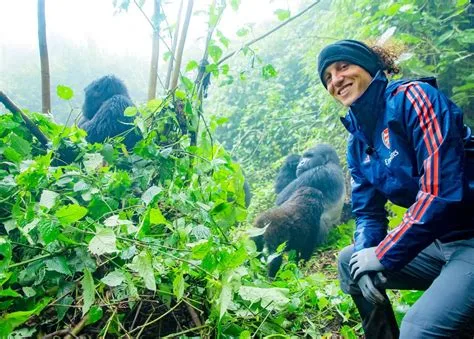
When the gorillas are found, the group leaves bags and walking sticks behind and approaches quietly. Visitors are allowed exactly one hour with the gorillas, regardless of how long the trek took. The time passes quickly. Guides enforce a minimum distance of seven meters, prohibit flash photography, and ask visitors to avoid direct eye contact if a gorilla approaches. The family may be feeding, grooming, playing, or resting, and the silverback typically remains watchful nearby. After the hour, the group retraces its route to the trailhead, often arriving back at the lodge in the mid-to-late afternoon.
Fitness and Preparation
Gorilla trekking is not a casual walk. The honest minimum fitness requirement is the ability to walk uphill for two to three hours continuously on uneven, muddy ground . Treks at Bwindi can last anywhere from one to eight hours depending on the family's location and the trail conditions . Travelers with reasonable cardio fitness and functional knees can manage, but preparation makes the experience far more enjoyable. Regular walking, stair climbing, or hill training in the months before travel is recommended.
For travelers with limited mobility, UWA offers sedan chair transport at some Bwindi sectors, primarily Buhoma and Rushaga. Four porters carry a stretcher-like chair through the forest, at a cost of around $400 to $500 arranged in advance. This service makes trekking possible for people who could not otherwise manage the hike, though it is not available on all trails or for the steepest sections.
What to Wear and Pack
The forest is hot, humid, muddy, and full of stinging nettles, ants, and thorny undergrowth. Clothing matters more than on most hikes.
Essential items include waterproof hiking boots with ankle support (trail runners and sneakers will not survive the mud), long trousers tucked into socks to protect against nettles and insects, a long-sleeved moisture-wicking shirt, and a waterproof rain jacket. Gardening gloves or light work gloves are the item most people forget and most regret forgetting—you will grab branches and roots to pull yourself up slopes, and gloves protect your hands from thorns and stinging plants. Gaiters are optional but useful for keeping mud and debris out of boots.
In a daypack, carry two to three liters of water (there are no refill points on the trail), high-energy snacks, a camera with flash disabled, a rain cover for the pack, insect repellent, and sunscreen. Do not bring tripods or selfie sticks (not permitted), bright or flashy clothing, or strongly scented products, as gorillas are sensitive to artificial scents.
Rules and Etiquette
UWA enforces strict rules to protect the gorillas, and violations can result in removal from the trek without refund. The most important rules include: maximum eight trekkers per gorilla group per day; one hour maximum with the gorillas; minimum seven meters distance; no flash photography; no eating or drinking within 200 meters of the gorillas; and no trekking if you are ill. Gorillas are highly susceptible to human respiratory diseases, and rangers will turn away anyone with a cold, cough, or flu symptoms. This rule is non-negotiable and exists to protect a species whose survival is already precarious. Children under 15 are not permitted to trek.
Combining Gorillas with Other Experiences
Uganda rewards travellers who linger. Bwindi itself is a biodiversity hotspot with 350 bird species, 310 butterfly species, and ten other primate species, including chimpanzees. Lake Bunyonyi, a short drive from Bwindi, offers a tranquil contrast to the forest with swimming, kayaking, and island exploration. Queen Elizabeth National Park, with its tree-climbing lions and savannah wildlife, is a natural addition to a gorilla itinerary. Kibale Forest offers chimpanzee trekking. A ten-to-twelve-day Uganda trip can combine gorillas with these experiences, creating a richer safari than a gorilla-focused visit alone.
Conclusion
Gorilla trekking in Uganda is an investment—of money, of time, and of physical effort—but it is one that consistently ranks among travelers' most treasured wildlife encounters. The key to a successful trip lies in choosing the right park for your priorities, securing permits well in advance, preparing physically for the demands of the forest, and arriving with realistic expectations about the unpredictability of the trek itself. Bwindi offers certainty and variety; Mgahinga offers solitude and volcanic drama. The dry season offers easier trails; the wet season offers fewer crowds and lower prices. Whichever combination you choose, the hour spent in the presence of a gorilla family has a way of making every muddy step and every logistical hurdle feel entirely worthwhile.
Plan Your Journey with Elyson Adventures
Navigating permit allocations, cross-border logistics, and comfortable accommodations requires seasoned local expertise. Our Kampala-based team handles every detail so you can focus entirely on your encounter with the gentle giants of the mist. Get in touch to start designing your tailor-made primate safari by visiting ourhttps://elysonadventures.com/ page.
Planifica un viaje a partir de esto
Cuéntanos tus fechas y qué quieres ver. Nosotros creamos la ruta.