Por ahora esta historia solo está en inglés.
The migration of wildebeest is the year-round, clockwise movement of well over a million wildebeest around the Serengeti-Mara ecosystem of Tanzania and Kenya. Hundreds of thousands of zebra and gazelles travel with them. The herds follow the rains and the fresh grass, and each animal covers roughly 800 to 1,000 km over one full loop. The migration has no start or end date. Calving in the south peaks around February, the Mara River crossings in the north peak around August and September, and the herds are back in the south by December.
This article explains why the migration matters, what drives the animals, and where the herds are in each month. It also compares the Serengeti and the Maasai Mara as viewing bases and shows how to plan a trip around the movement. You will also see where the neat calendar breaks down, because rainfall sets the timing, not the date.
We are a safari company based in Kampala that plans private trips across East Africa, including Great Migration safaris in both Kenya and Tanzania. What follows is the practical picture we give travelers before we suggest a route.
Why the wildebeest migration matters
The wildebeest migration matters because it drives the ecology of the Serengeti-Mara, and because it is one of the few wildlife events big enough to plan a whole trip around. The scale explains both points.
A cycle that shapes the whole ecosystem
Estimates of the wildebeest population run from about 1.3 million to 2.5 million, depending on the census. Around 300,000 zebra and many Thomson's gazelles move alongside them. Over one loop each wildebeest covers 800 to 1,000 km, which makes this one of the largest overland mammal movements on Earth.
The herds feed everything around them. Roughly 250,000 wildebeest and 30,000 zebra die each year from predation, drowning, thirst, hunger and exhaustion, and that supports lions, hyenas, crocodiles and vultures. About half a million calves are born every year, so the herd replaces its losses and keeps going.
The herds never stop moving, so the migration is a cycle of birth, travel and loss rather than a single trip across a border.
Why it matters if you plan to travel
Few safari experiences offer such different highlights within one event. You can build a trip around any of three sights:
- Calving season on the southern plains, peaking in February, when as many as 8,000 calves can be born in a single day.
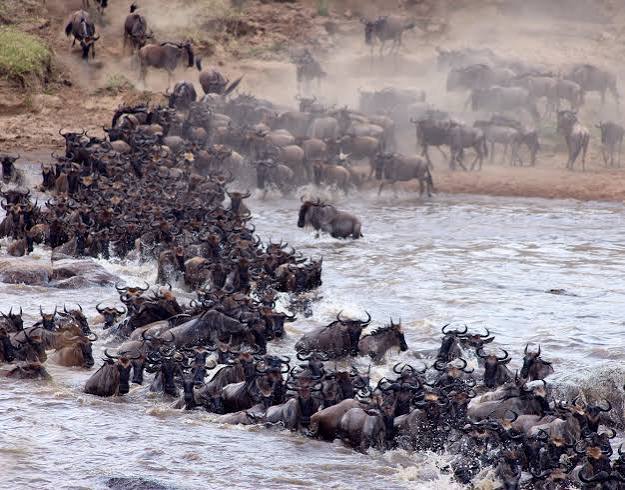
- River crossings on the Mara River, where thousands of animals plunge down steep banks past waiting crocodiles.
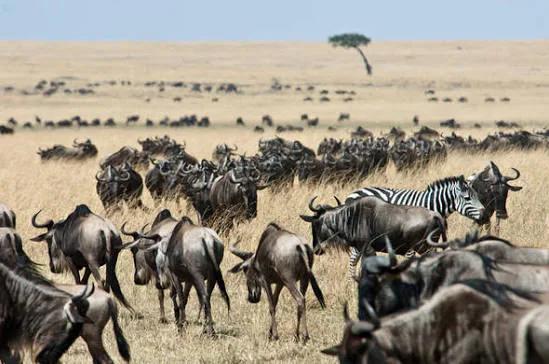
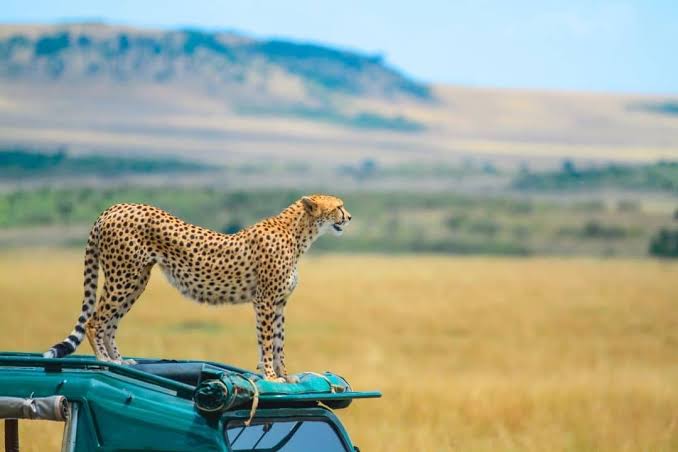
- Massive herds moving across open grassland, with lions, cheetahs and hyenas working the edges.
Predator action runs through all three. The choice that matters most is which sight you want, because it decides your month and your base. Most of the planning later in this article follows from that decision.
Why wildebeest migrate and how the cycle works
Wildebeest migrate because the grass and water they need are not in the same place all year, and rain decides where the food is. They are following food, not a map.
Rain and new grass set the route
The southern plains around Ndutu grow short, mineral-rich grass on volcanic soil. It thrives in the rains and dries out quickly once they end. That makes it ideal for calving mothers, so the herds gather there from about December to March.
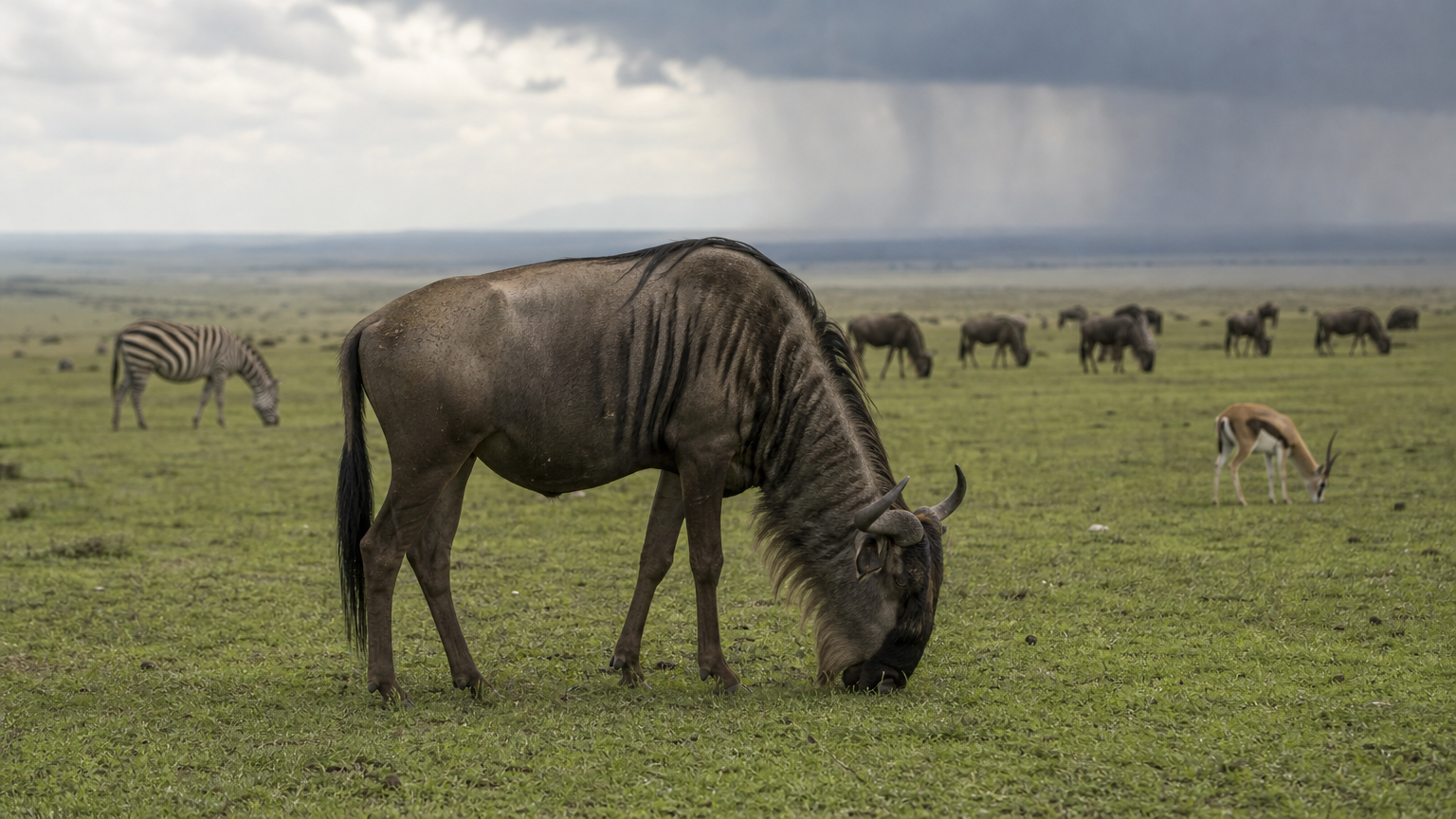
As the south dries, the herds push north and west. They pass through the Western Corridor and reach the northern Serengeti and the Maasai Mara, where grazing and water hold up longer. When the short rains return around October and November, they turn south again.
How the animals know where to go is still unsettled. Most researchers say they respond to rainfall and the growth of new grass. Some suggest they detect distant storms from as far as 50 km away, but nobody has proven it.
Rain, not a fixed route, steers the wildebeest, which is why the timing shifts from year to year.
Who eats first: the grazing sequence
Three species move together, and they feed in a fixed order:
- Zebras arrive first and crop the tall, coarse grass.
- Wildebeest follow and eat the shorter, fresher shoots that sprout afterward.
- Thomson's gazelles come last and nibble the tender growth close to the ground.
This sequence is why zebras travel with the wildebeest instead of competing with them. It also explains why each species mostly stays with its own kind, with only limited overlap along the route.
Why the herds cross between Kenya and Tanzania
The border means nothing to the animals. Many people ask why the great migration in Africa runs from Kenya to Tanzania and back, and the answer is the same grass-and-water logic. Some herds enter the Maasai Mara in Kenya, while many linger along the Tanzanian bank of the Mara River. They often cross north one day and back south a few days later.
The wildebeest migration month by month
The herds travel clockwise: south for calving, west and north through the Serengeti, into the Mara, then back south. The table below combines the broad pattern that most guides describe.
The clockwise calendar
Months Where the herds are What you see December to March Southern Serengeti, Ndutu, northern Ngorongoro Conservation Area Calving, with the peak in February, and heavy predator activity April to May Moving north past Moru Kopjes and Seronera Long columns of animals, the long rains and fewer visitors June to July Western Corridor and Grumeti area Herds bunching at the Grumeti River, with crossings that are smaller than the Mara's August to September Northern Serengeti (Kogatende and Lamai) and the Maasai Mara The peak Mara River crossings October to November Maasai Mara grazing, then south through Loliondo and the Lobo area Herds spreading into smaller groups as the short rains pull them back south
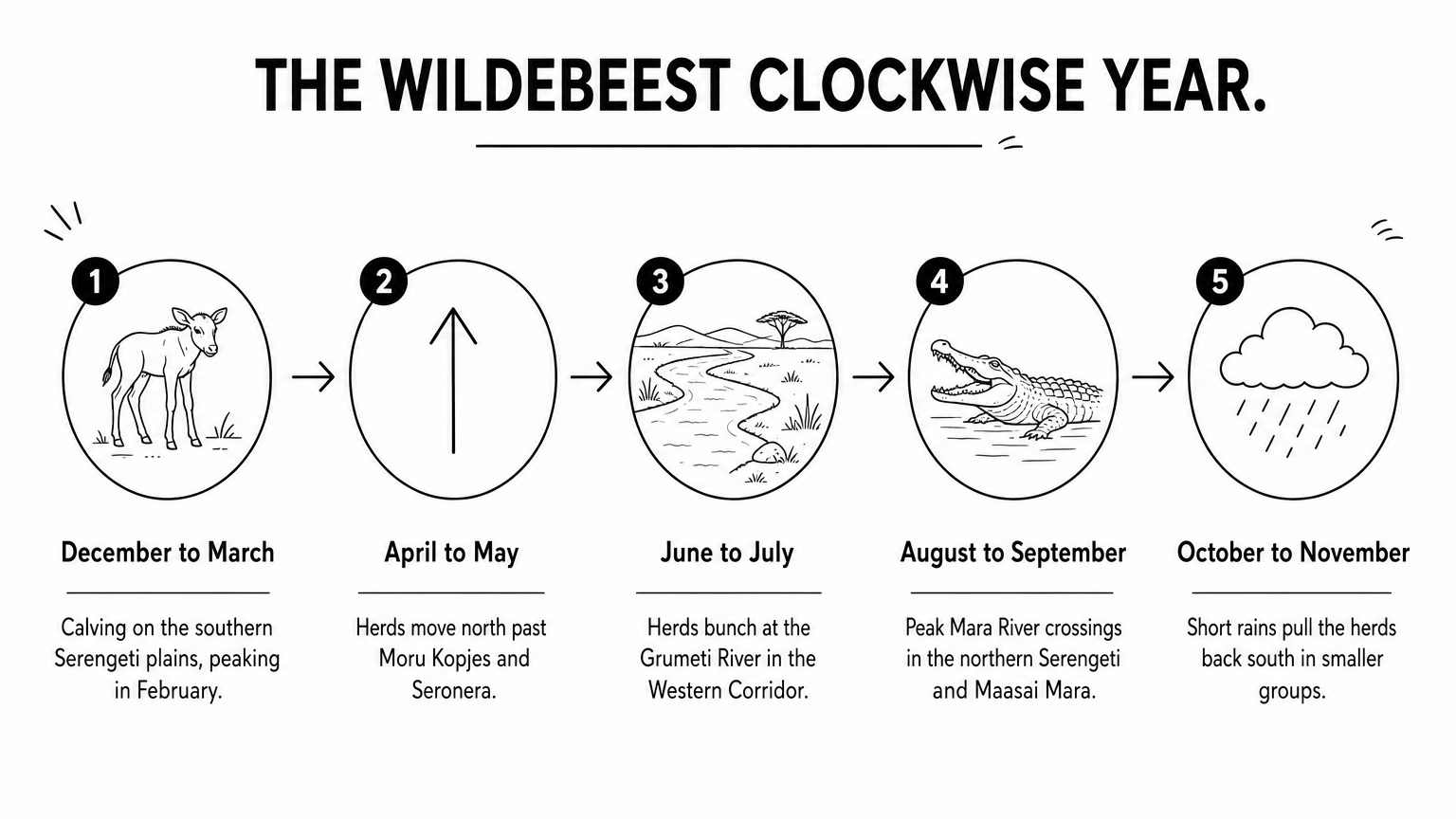
Treat these dates as a pattern, not a schedule. The leading herds can be weeks ahead of the stragglers, so the migration is stretched across the park, not a single block of animals.
The two peaks that most travelers chase
Calving gives you newborns, and a wildebeest calf can stand within minutes of birth. Calves are often born around midday, which gives them time to find their legs before nightfall. Predators know this, so the plains are busy.
The Mara River crossings usually peak from late July to early September, and they can stretch into October. They are dramatic, but neither the hour nor the exact spot can be predicted. Herds gather at a bank, hesitate, turn back, and then surge. That unpredictability is a large part of the appeal.
Why the calendar slips
Rainfall has become less predictable, so seasons can start early or late. A dry spell can keep herds in the north longer, while early rains can send them south sooner. Any month-by-month guide, including this one, tells you where to start looking, not where the herds will be on a given day.
Rain decides where the herds stand, so use the calendar as a starting point and not as a promise.
Where to see the herds: Serengeti or Maasai Mara
The best place to watch the migration of the wildebeest depends on the month. The southern Serengeti is strongest from December to March, the Western Corridor in June and July, and the northern Serengeti and Maasai Mara from August to October.
The Serengeti in Tanzania
The Serengeti is the larger of the two and holds the herds for most of the year. You can see them calving in the south, streaming through the central plains, or massing at the Grumeti River in the west. The northern Serengeti, around Kogatende and Lamai, is the Tanzanian base for the Mara River crossings.
This area is big and thinly developed, so camps matter. A camp close to the herds saves hours of driving. A mobile camp that moves with the animals can give you a closer experience.
The Maasai Mara in Kenya
The Maasai Mara is smaller, which makes the herds easier to find once they arrive, but also draws crowds quickly. Most of the herds do not move fully into Kenya. Many linger along the river's edge and move back and forth across it.
Private conservancies bordering the reserve are the best way to get away from the crowds. They are close enough for day trips to the herds, and they allow activities the reserve does not, such as night drives and bush walks. Naboisho is one of them.
What river crossings are really like
Crossings are loud, chaotic and brief. Animals jump from steep banks, others are crushed in the scramble, and crocodiles and big cats take their share. Vehicles bunch at the best viewpoints, so you may share the scene with many others.
If crowds bother you, consider the green season. From late March to late May, the Serengeti is quieter, the herds are in the central and western areas, and open plains give you clear views of hunts. Expect rain and muddy tracks, so you need a proper 4x4.
Pick your place by the month, and stay in a spot close to the herds so the viewing, not the driving, fills your day.
How to plan a trip around the migration
Plan backward from what you want to see: choose the sight, then the month, then the base, and leave extra nights for the herds to cooperate.
Start with your priority
Calving means a visit from January to March in the southern Serengeti. River crossings mean August and September in the northern Serengeti or the Mara. If you want big herds with fewer people, look at April and May. Our own best-time guidance points the same way: July to October and January to February for Kenya, and June to October and January to March for Tanzania.
Give the herds time
Spend at least three nights in the area where you want to see them. One night is a gamble, because herds can be a day's drive away or sitting at a river that refuses to cross. Extra nights cost less than a trip that misses the main event. Our private trips use your own vehicle and driver-guide, so you can wait at a crossing point as long as you want instead of following a group schedule.
Sample routes
These are starting points, and each can change in days, lodges and pace. All are quoted as tailor-made.
Route Length What it covers Great Migration Safari 7 days 1 night in Nairobi, 3 nights in the Maasai Mara, 2 nights in the northern Serengeti, with a private 4x4 and an English-speaking driver-guide 6 Days Tanzania Ultimate Safari 6 days Tarangire, the Serengeti and Ngorongoro Crater, with a visit to a Mara River crossing point in the northern Serengeti 5-Day Tanzania Fly-in Safari 5 days A fly-in from Arusha to the central Serengeti, with 3 nights in the Serengeti and 2 in the Ngorongoro Conservation Area Gorillas & the Great Migration 12 days Gorilla tracking in Bwindi, Uganda, then a flight to the Maasai Mara to see the herds
International flights and visas are not included in the 7-day Kenya and Tanzania route.
Choose the sight first, the month second and the camp third, then add nights so the herds have time to show up.
Seeing the herds for yourself
The migration is a continuous loop driven by rain and grass, where about a million or more wildebeest travel with zebra and gazelles through the Serengeti and the Maasai Mara. Calving in the south, the Grumeti and Mara River crossings, and the return south each have their own season. The exact timing shifts with the weather.
If you want to see the herds, decide whether you are after calving, river crossings or open-plains herds, then leave a few extra nights for the animals to arrive. If you are not sure which month or route fits, tell the Elyson Adventures team what you want to see and when you can travel, and we will suggest a route and a price.
Planifica un viaje a partir de esto
Cuéntanos tus fechas y qué quieres ver. Nosotros creamos la ruta.