Per ora questa storia è disponibile solo in inglese.
The Serengeti is not just a national park; it is a definition. When people close their eyes and imagine an African safari, the image that appears—endless golden plains, acacia trees silhouetted against a burning sky, and herds of wildebeest stretching to the horizon—is almost certainly the Serengeti. Covering roughly 14,750 square kilometers in northern Tanzania, this UNESCO World Heritage Site is home to the world's last great terrestrial mammal migration and one of the densest lion populations on Earth . But the Serengeti is also a complex, varied ecosystem with distinct zones, seasonal rhythms, and experiences that reward careful planning. This guide breaks down what you need to know to explore it well.
Understanding the Park's Geography
The Serengeti is too large and too ecologically dynamic to treat as a single destination. Safari operators and guides typically divide it into four practical zones, each with its own character and optimal timing .
The Southern Plains, encompassing the Ndutu area and the Gol Mountains, are characterized by short, mineral-rich grasslands formed from volcanic ash. This is the setting for the wildebeest calving season from December through March. Technically, much of Ndutu sits within the Ngorongoro Conservation Area rather than the national park proper, but it functions as a single wildlife zone and is treated as such by camps and guides .
The Central Serengeti, dominated by the Seronera Valley, is the park's most visited and most reliable year-round zone. A network of rivers sustains a varied and stable wildlife population, with excellent leopard sightings along the Seronera River's riverine forest and resident lion prides that are accustomed to vehicles. This is also where the greatest concentration of permanent camps and lodges is found .
The Western Corridor follows the Grumeti River toward Lake Victoria. The migration passes through from roughly May to July, and the area holds some of the park's most exclusive concessions, including the private Singita Grumeti Reserve. The riverine forests here support black and white colobus monkeys not found elsewhere in the park .
The Northern Serengeti, around Kogatende and the Lamai Wedge near the Kenyan border, is the setting for the Mara River crossings from roughly July through October. Outside that peak window, it offers the park's most remote and least crowded game viewing .
The Great Migration: A Year-Round Phenomenon
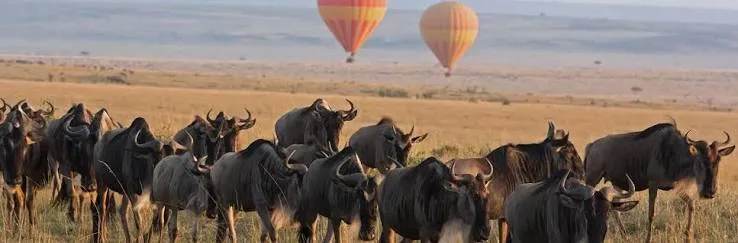
The Great Migration is often described as a single event, but it is in fact a continuous, year-round movement of more than 1.5 million wildebeest, accompanied by hundreds of thousands of zebras and gazelles, following seasonal rains across the Serengeti-Mara ecosystem . Rainfall determines the herds' movements, so no two years are identical, but the general pattern is predictable enough to plan around.https://elysonadventures.com/tours/4-days-serengeti-ngorongoro-tanzania
December to March finds the herds on the short-grass plains of the southern Serengeti and Ndutu. This is the calving season, when over 100,000 wildebeest calves are born within a few weeks. Most can stand and run within minutes of birth, but the concentration of vulnerable newborns draws predators—lions, cheetahs, hyenas, and leopards—making this one of the most dramatic periods for wildlife observation .
April to June sees the herds move northwest through the central and western Serengeti as the southern grass runs out. The crossing of the Grumeti River is dangerous, with some of the largest Nile crocodiles in the world waiting in the water. This is also the mating season, a noisy and active period for the herds .
July to October is the period most associated with the migration: the Mara River crossings in the northern Serengeti. Wildebeest gather on the riverbanks in huge, nervous numbers before plunging into the water, where crocodiles await and lions patrol the far bank. The crossings are unpredictable—herds may wait for hours or days, or cross with little warning—but the drama is unmatched . This is the peak season, and camps in the north book out months in advance.
November and December bring the herds back south along the eastern side of the park, completing the circle. This is a quieter time on the safari circuit, with fewer vehicles and excellent wildlife viewing as the females, many now heavily pregnant, return to the calving grounds .
Beyond the Migration: The Big Five and Birdlife
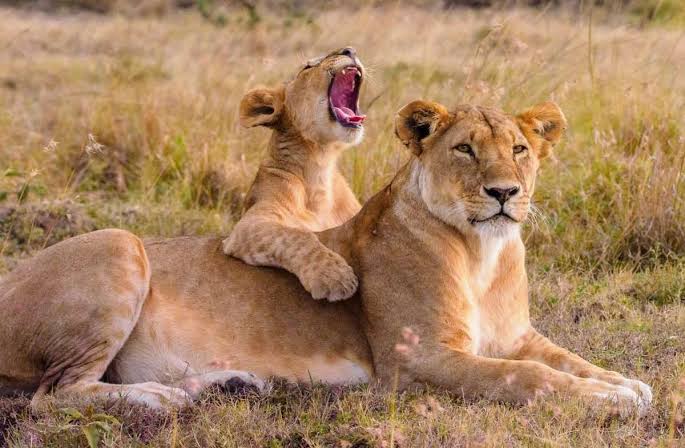
While the migration dominates the Serengeti's reputation, the park is home to all of Africa's Big Five: lion, leopard, elephant, buffalo, and rhinoceros . The Serengeti's lion population is estimated at around 4,000, one of the largest in Africa . Leopards are most reliably seen in the Seronera Valley's riverine forest, draped along branches during the heat of the day. Elephants move through the northern woodlands and the western corridor, while buffalo herds are widespread. Black rhinos are present but less common than in the Ngorongoro Crater, and sightings require luck and a knowledgeable guide.
For birders, the Serengeti offers over 500 recorded species, including ostriches, eagles, and flamingos . The Grumeti River and Seronera Valley are particularly productive for waterbirds and raptors.
Safari Activities: More Than Game Drives
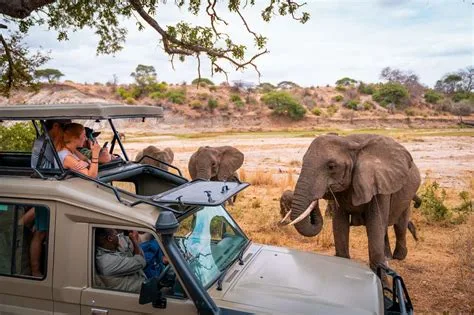
Game drives remain the core of any Serengeti experience, but the park offers several ways to engage with the landscape that go beyond the standard vehicle circuit.
Hot air balloon safaris are perhaps the most celebrated alternative. Floating above the plains at sunrise, with the migration visible below and the horizon stretching endlessly, is a perspective that no game drive can replicate. Most balloon safaris conclude with a champagne breakfast in the bush .
Walking safaris have become increasingly available in Serengeti National Park under revised regulations. Led by an experienced guide and an armed national park ranger, these walks typically run in the cooler hours of early morning or late afternoon, focusing on tracking, plant identification, and the "small five"—the insects, tracks, and signs that vehicle-based safaris inevitably overlook . Walking allows you to feel the scale of the plains in a way that is impossible from a seat.
Bush meals and sundowners are a staple of the Serengeti experience. A picnic lunch under an acacia tree or a gin and tonic at sunset, with the plains stretching to the horizon, is a cliché for a reason: it remains one of the most pleasurable ways to end a day in the bush .
Where to Stay: Matching Your Camp to the Season
The Serengeti covers roughly 14,750 square kilometers, and choosing the right area for your travel dates matters as much as choosing the right camp . Permanent lodges offer solid facilities and reliability; tented camps provide a closer-to-the-bush feel; and mobile camps move throughout the year to stay near the migrating herds .
For the calving season (December–March), camps in the Ndutu area and southern Serengeti are essential. Ndutu Safari Lodge is a well-established mid-range option overlooking Lake Ndutu .
For the Mara River crossings (July–October), the northern Serengeti is the place to be. Sayari Camp, near Kogatende, is the closest permanent camp to the Mara River, while Lamai Serengeti sits on a kopje in the far north with easy access to the crossing points .
For year-round reliability, the central Serengeti around Seronera offers strong game viewing and the widest range of accommodation, from the luxury Four Seasons Safari Lodge to mid-range options like Serengeti Serena Safari Lodge .
For those wanting to follow the herds with maximum flexibility, mobile camps such as andBeyond Serengeti Under Canvas move from Ndutu through Seronera and Grumeti to Kogatende over the course of the year .
Getting There and Practicalities
Most visitors arrive by road through Naabi Hill Gate, the busiest entry point on the eastern boundary shared with the Ngorongoro Conservation Area. The drive from Arusha via Ngorongoro takes roughly five to six hours and covers around 320 to 350 kilometers . Flying is the more common choice for those prioritizing time: scheduled light aircraft connect Seronera, Kogatende, Lobo, and Grumeti airstrips with Arusha, Kilimanjaro, and other northern circuit destinations .
Park fees are payable at the gates, and visitors arriving via Naabi Hill can process permits for both the Serengeti and the Ngorongoro Conservation Area in one stop .https://elysonadventures.com/
A Note on Timing and Expectations
The Serengeti is one of the few safari destinations where there is genuinely no bad time to visit, but each season offers a different experience . The peak season for river crossings (July–October) brings the most dramatic wildlife moments but also the most vehicles. The green season (April–May) offers lush landscapes, dramatic skies, and far fewer tourists, though some roads may be difficult. The calving season (January–March) delivers exceptional predator activity and the raw spectacle of birth on the plains. The choice depends on what you want to see and how you want to see it.
What the Serengeti demands, above all, is patience. The migration does not run on a schedule. River crossings may not happen on the day you arrive. A leopard may remain hidden in the canopy. But the Serengeti rewards those who settle into its rhythms rather than fighting them. The plains have been this way for millennia, and they will continue long after the last safari vehicle has returned to camp. To visit is to witness something older and larger than any itinerary can contain.
Pianifica un viaggio a partire da qui
Dicci le tue date e cosa vuoi vedere. Costruiremo noi l’itinerario.